These past two weeks have been consumed by a small round fruit. The olive and its harvest.
learning by doing
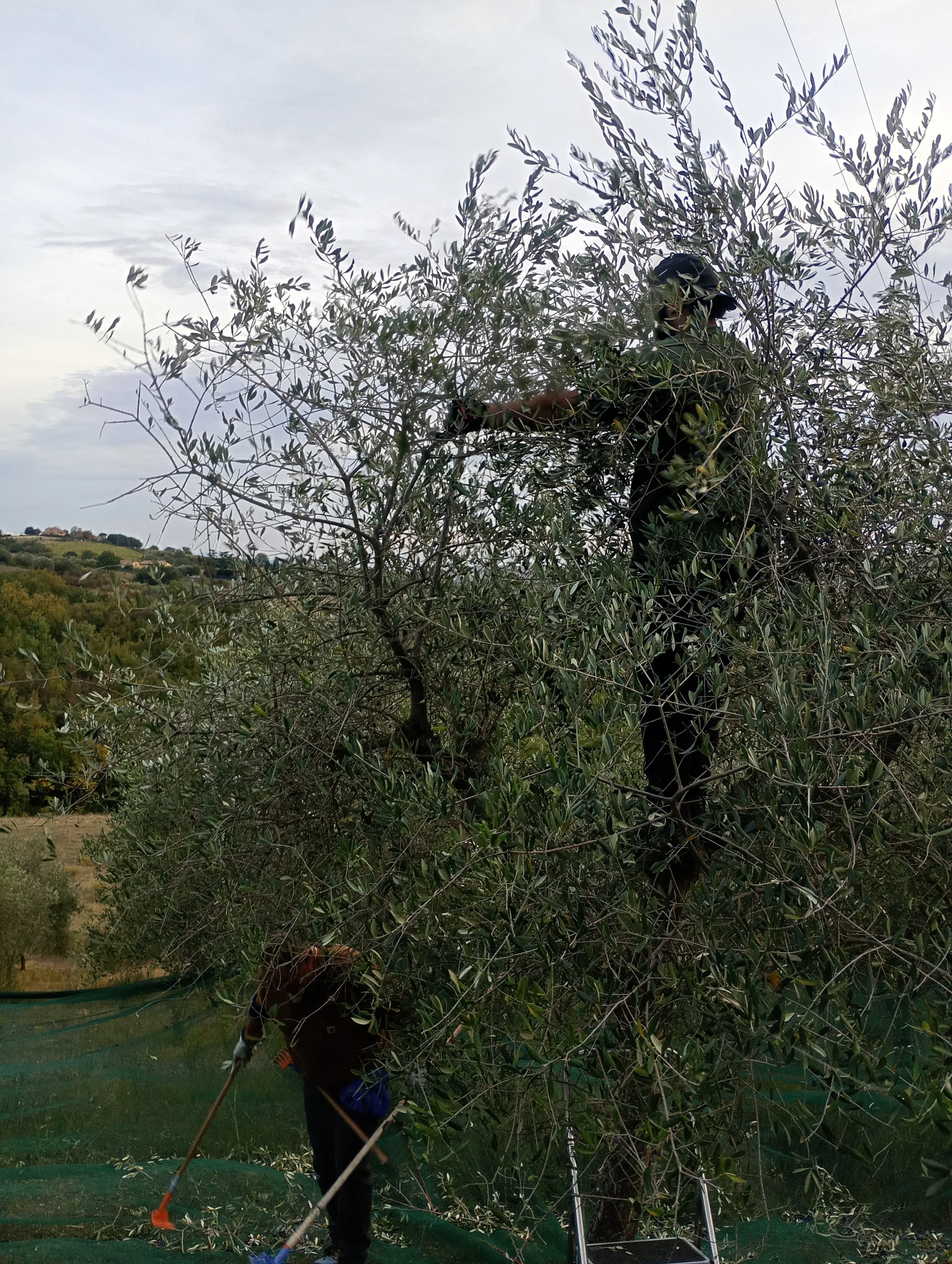
I’ve lived in Umbria for around 2 years now, and this is the first year that I have olive trees to harvest from. Luckily, it also happens to be a great year for olives, that pesky fly that usually ruins the crop left us alone this year. The trees are heavy with fruit and it’s become our job to collect these tiny fruits whilst preserving their integrity so the resulting oil is as good as it can be.
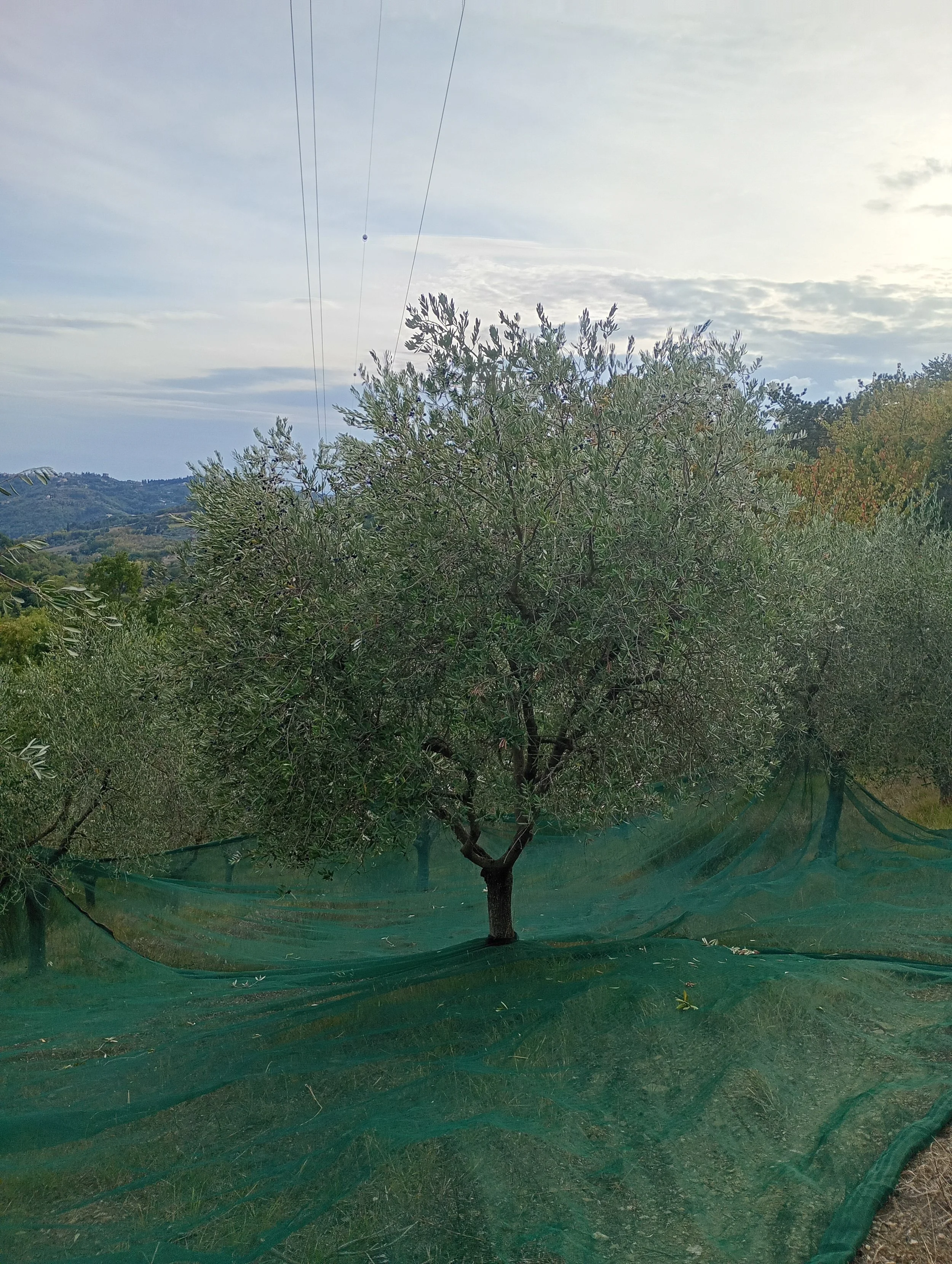
We went into this process undereducated on the art of olive harvesting, but when you’re looking at a field of around 120 trees, you need to adapt quickly when your technique is slowing you down. I can confidently say that we have now arrived at a point where the days are just as tiring, but the productivity is doubled. On day one we were doing each tree individually and completely by hand, our only tools being a large net for catching the olives and plastic rakes for knocking them off the tree. That first day we spent the entire day in the grove and filled 8 crates with olives, which we felt quite good about. Just yesterday, after 2 weeks of almost daily harvesting and a successful press of our first round (448KG of olives = 58Liters of oil), we managed to fill 9 crates in a half days work. It seems like a simple task, but harvesting olives can become revolutionized by having a better technique.
to The press
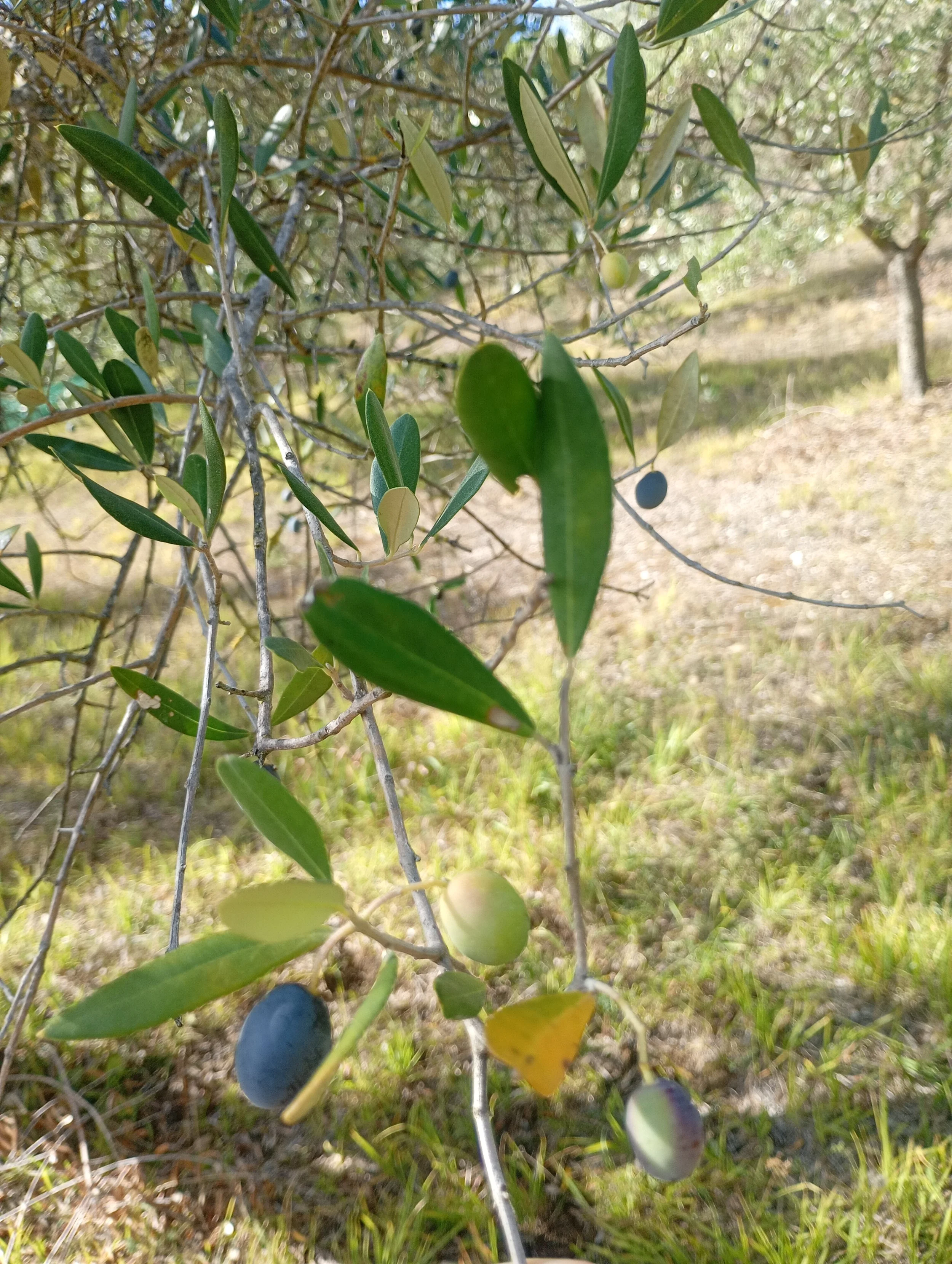
Taking the olives to the press for the first time last weekend was very satisfying. We decided to bring our olives to Il Nocciolino, a local frantoio (olive press) that works with modern technology to cold-press extra virgin olive oil. We were very happy with the process and the result! In just three days from now we are gearing up for another press at the same frantoio, this time with olives who have been on the tree for a few days to a week longer than the last round. That most likely means that we will get slightly more oil for the volume of olives we bring to them. Usually the longer you leave your olives on the tree, the more ripe and juicy they are, and the more oil you get. However it is quite fashionable in this area of the world to pick the olives early, before they’ve matured, in order to achieve a more precious oil. The early-pick oil is more spicy and richer in nutrients, but of course you get a lot less oil for all your hard work. We tried our best to fall somewhere in the middle, making sure we had a few green olives in there to give our oil the tastiness we desired.
Tasting the oil
It’s quite a surreal experience tasting your own oil. Ours is bright green and hits you in the back of the throat. We keep calling it liquid gold, and in a way it really is. We collected all of these olives with our hands, under the warm october sun, surrounded by laughter and positivity. The healing properties of the oil are undeniable, extra virgin olive oil of this quality is widely accepted as being medicinal. We know our trees haven’t been treated with any chemicals of any sort since they were first planted on our gorgeous land 30 years ago. We don’t really feel like getting into the business of piling up certifications, but our grove would be eligible for all the organic/biodynamic/regenerative/etc. certifications that exist. We’re not producing a ton of it either, just what we can manage to pick with our own hands while the season is right. We got 58L last week, probably a bit more this week, and then perhaps a third week of picking if the weather is forgiving. Even after 3 weeks of picking, we still don’t think we can manage all the trees, but we will certainly try!
Giving back to the land
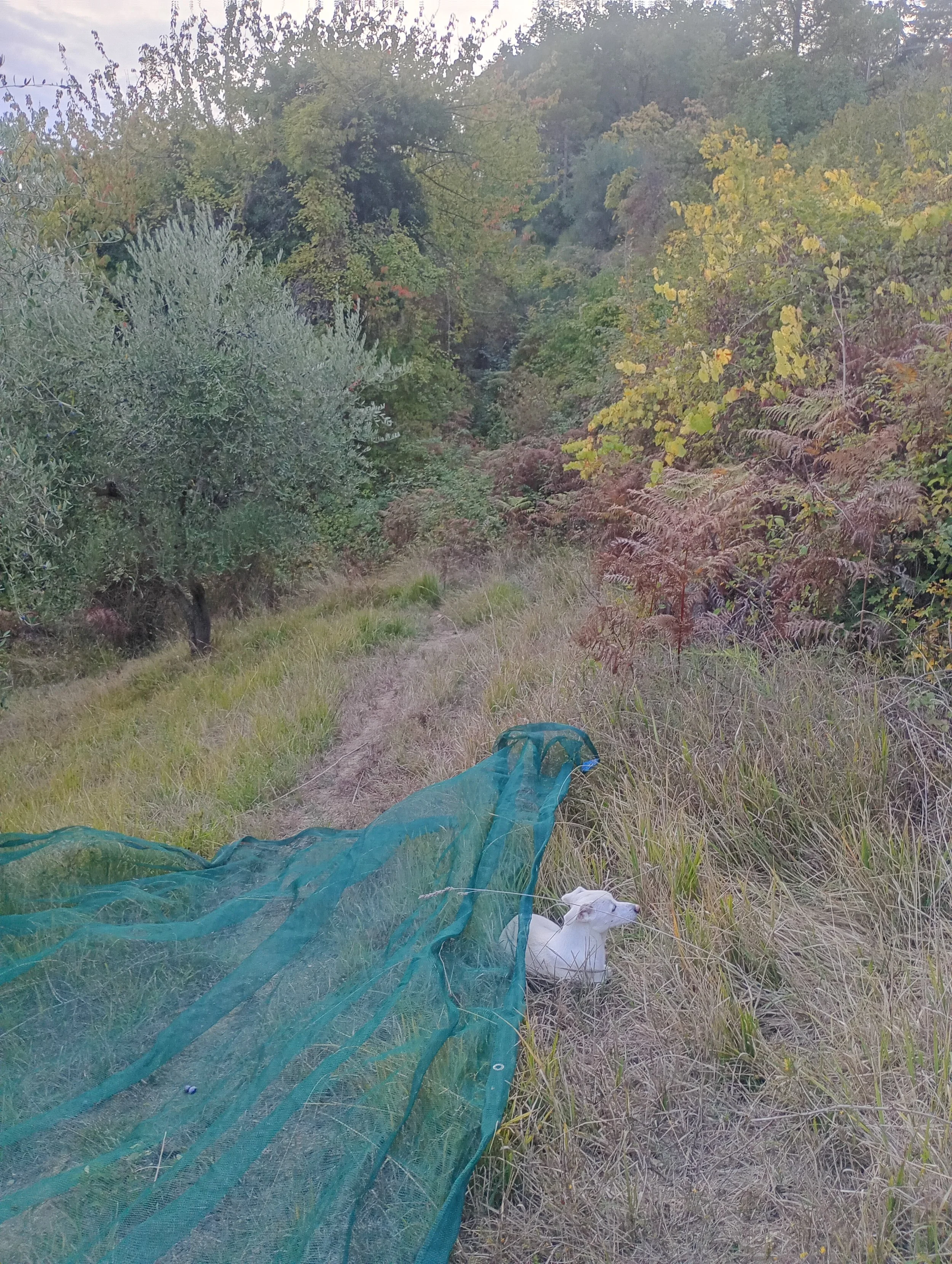
The principle of reciprocity has become really important for us. The land has provided for us, and quite generously. After the harvest it’s time to start thinking about how we can care for the land. A friend of mine told me about a local practice of spreading the olive mush that comes out of the press back on the soil. If we weren’t taking the olives from the trees, they would drop and enrich the soil below, so we will try and simulate this process by repurposing a “waste product” of the olive oil process. We also have plans to plant a regenerative vineyard on the land this winter, when the grape vine roots are dormant. This is the start of a long, loving relationship with our little piece of heaven here in Umbria.
If you’d like to follow along on our journey, you can follow us on instagram at @thesuttonsland.
